
Lessons from the Gardens of Japan
Some of the best training a garden builder can get is simply looking, slowly, at great work. These photos come from our study visits to gardens in Kyoto, Nara, Kamakura and Takamatsu. They are not our projects. They are the gardens that taught us to set a stone so it looks like it grew there, to prune a tree for the next fifty years, and to lay a path that tells you how fast to walk. Here is what we took home to Maine.
Stone walls
Dry-laid and rough-stone walls, from mountain temples to city streets.
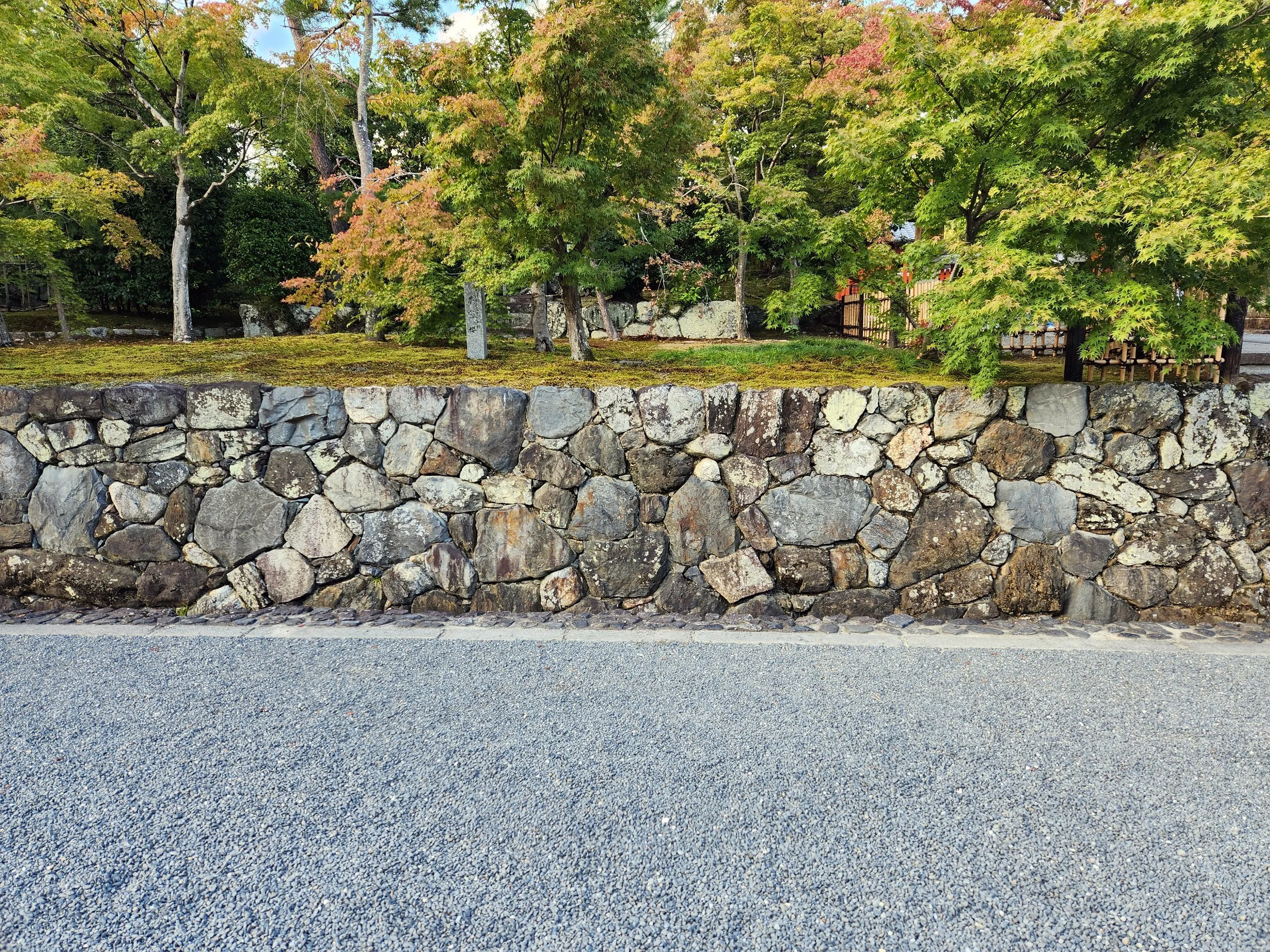
Nozura-zumi stone wall, Arashiyama, Kyoto
A low wall of natural, unshaped stones holds a mossy maple bank above a gravel walk. The Japanese call this rough style nozura-zumi. Each stone is set on its long axis and the face is kept quiet, so the wall supports the trees instead of competing with them.
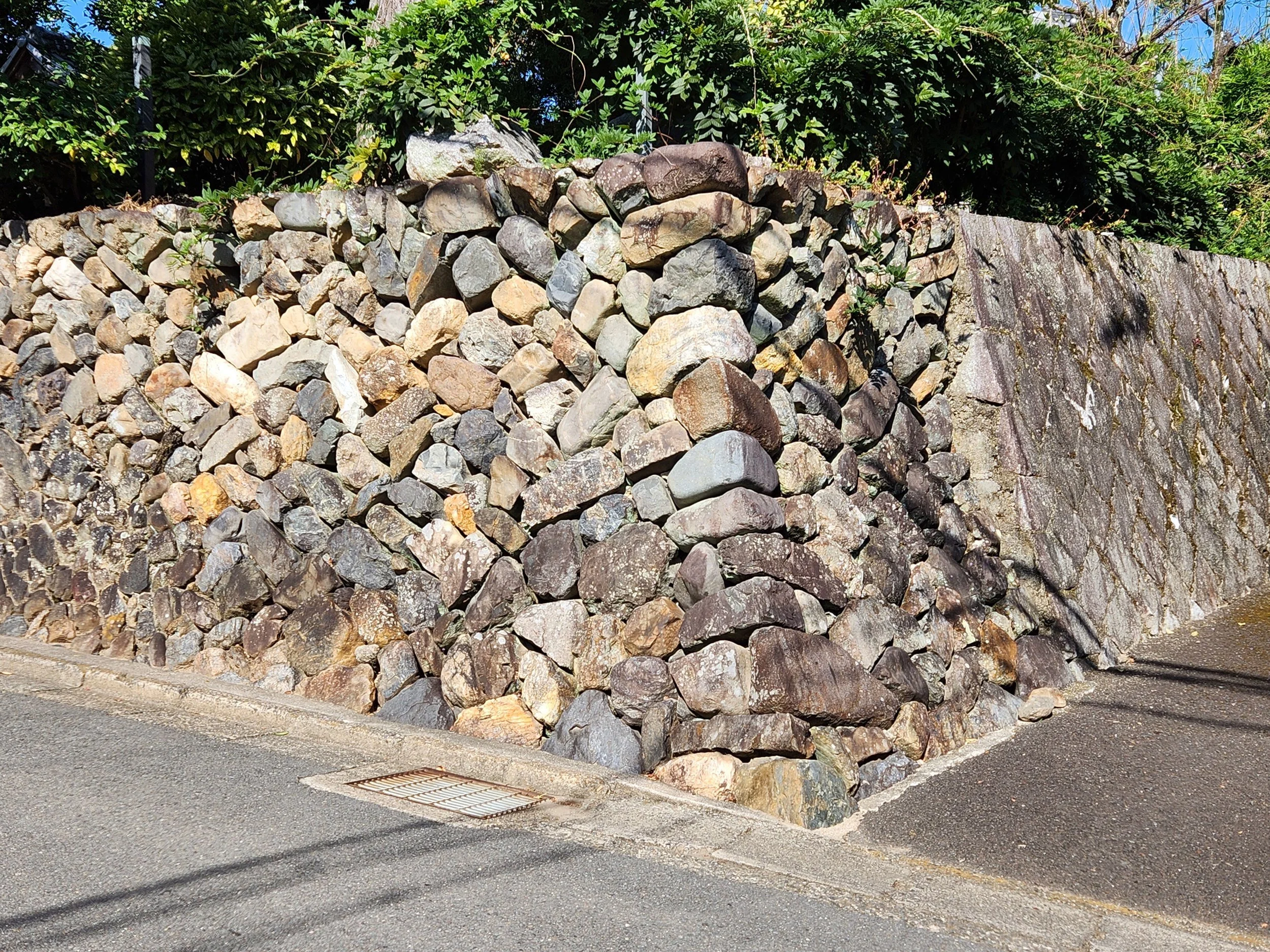
Battered retaining wall, Kyoto
A tall retaining wall with a strong lean back into the slope (batter) and stones tightening toward the corner. This is the same physics we use in Maine. A battered, well-hearted wall carries the load of the hill and lets frost and water pass through instead of pushing the wall over.
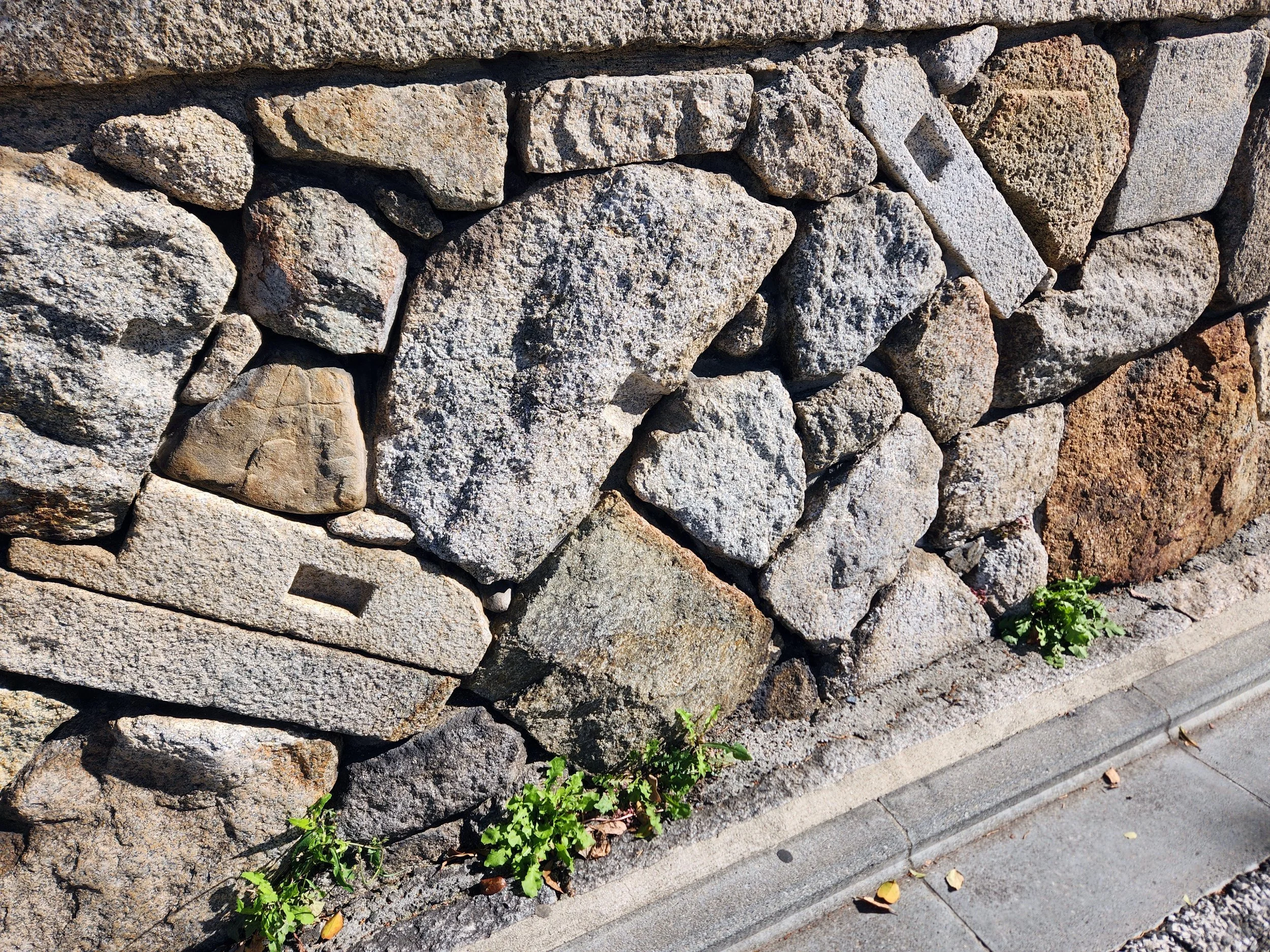
Salvaged cut stone in a rubble wall, Japan
Old cut blocks, one still showing a mortise pocket, are worked back into a rubble wall alongside rough stones. Nothing is wasted. When we rebuild an old New England wall or foundation, we look for the same chance to give salvaged stone a second life.
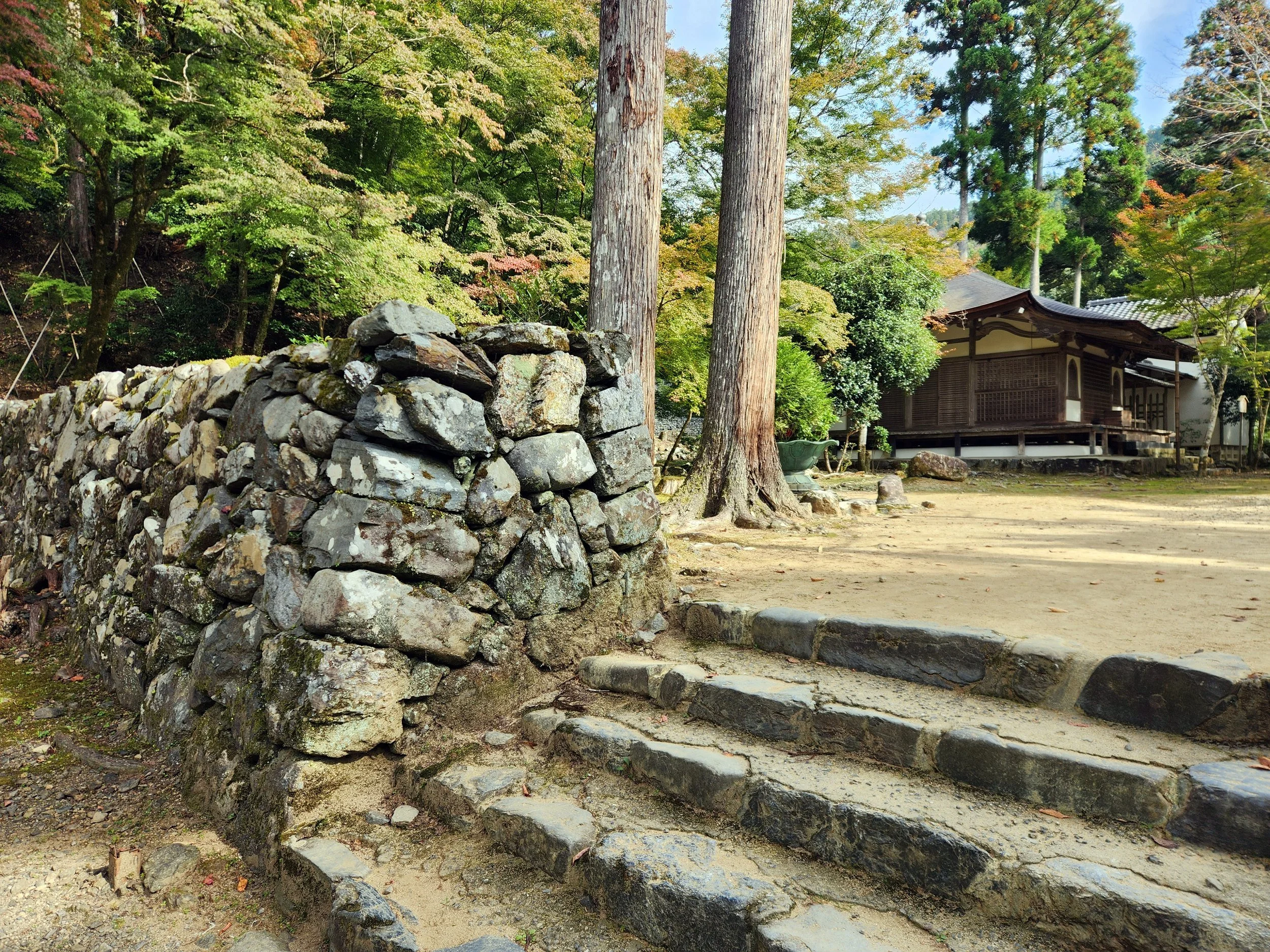
Mountain wall and stone stair, Kōzan-ji, Takao
A dry-laid mountain wall turns a corner and becomes a stair. Wall, steps and landing read as one piece of stonework, a detail we use constantly on Maine's sloped sites.
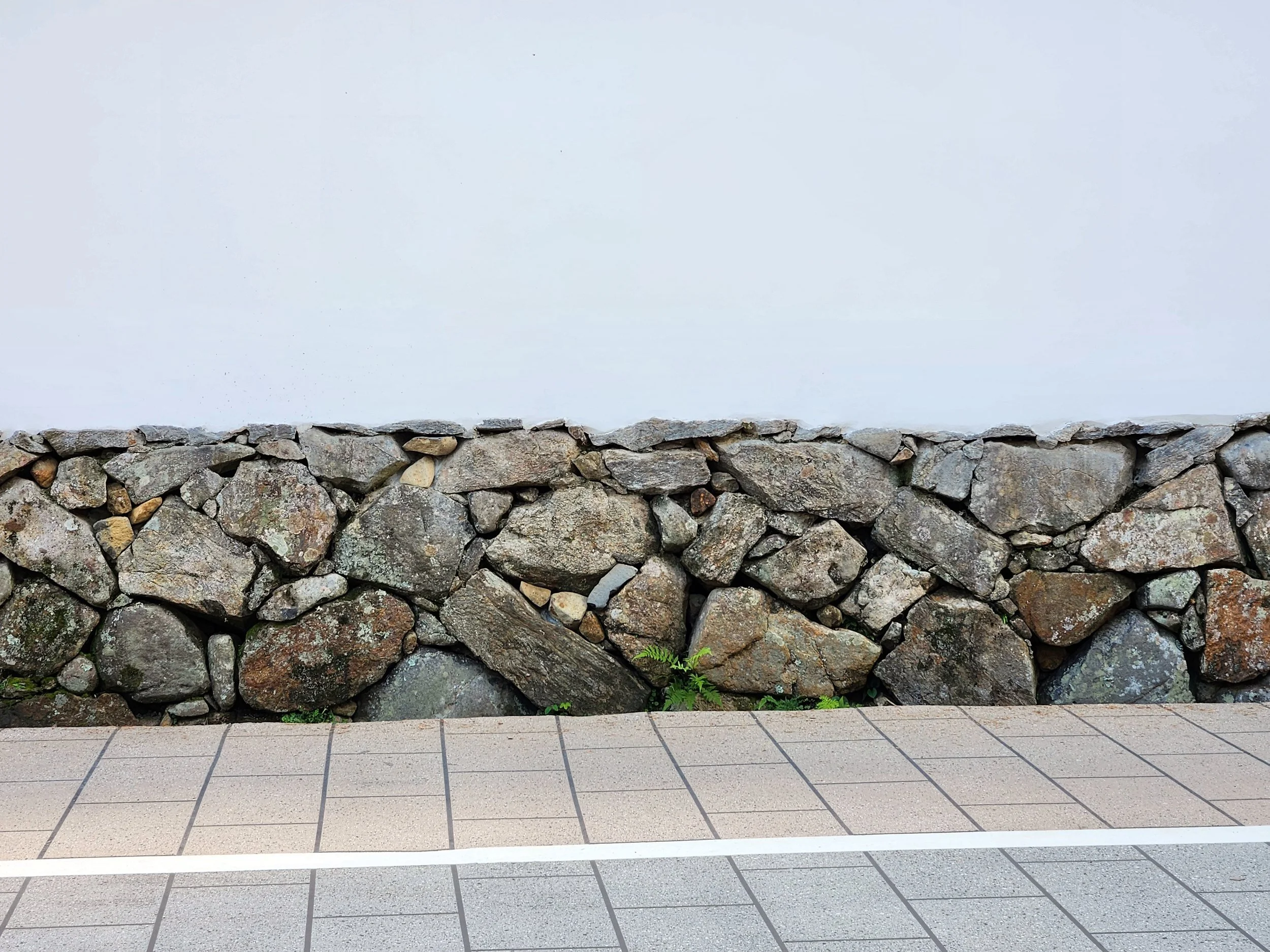
Fieldstone base under a plaster wall, Nara
A rough fieldstone base under a white plaster wall. Heavy, dark stone at the bottom, light and smooth above: a simple contrast that makes both look better.
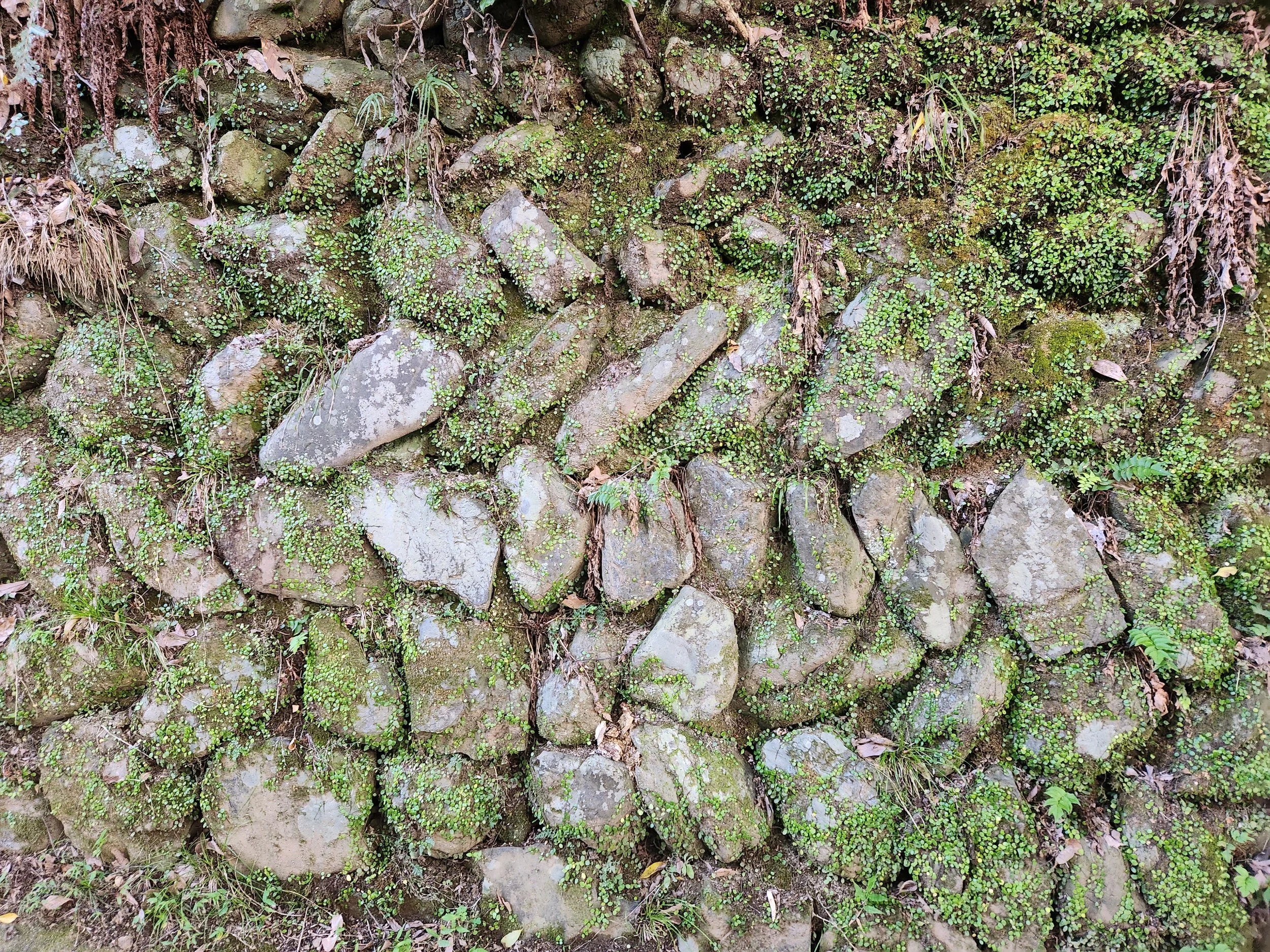
Herringbone (yahazu-zumi) stone wall, Arashiyama, Kyoto
Stones laid on edge in diagonal courses, leaning in opposite directions row by row, softened by moss and ferns. Japanese masons call this herringbone pattern yahazu-zumi. In a country that shakes often, it earns its place: each stone is set at an angle into the stones below, so as the wall settles or moves, gravity wedges it tighter against its neighbors instead of letting it slide out. There is no continuous horizontal joint for the face to shear along. No dry wall is earthquake-proof, but this one is built to give a little and hold. Frost heave is Maine's version of a slow earthquake, and the same principle applies.
Walkways and paths
How cut stone, cobble and gravel set the pace of a walk.
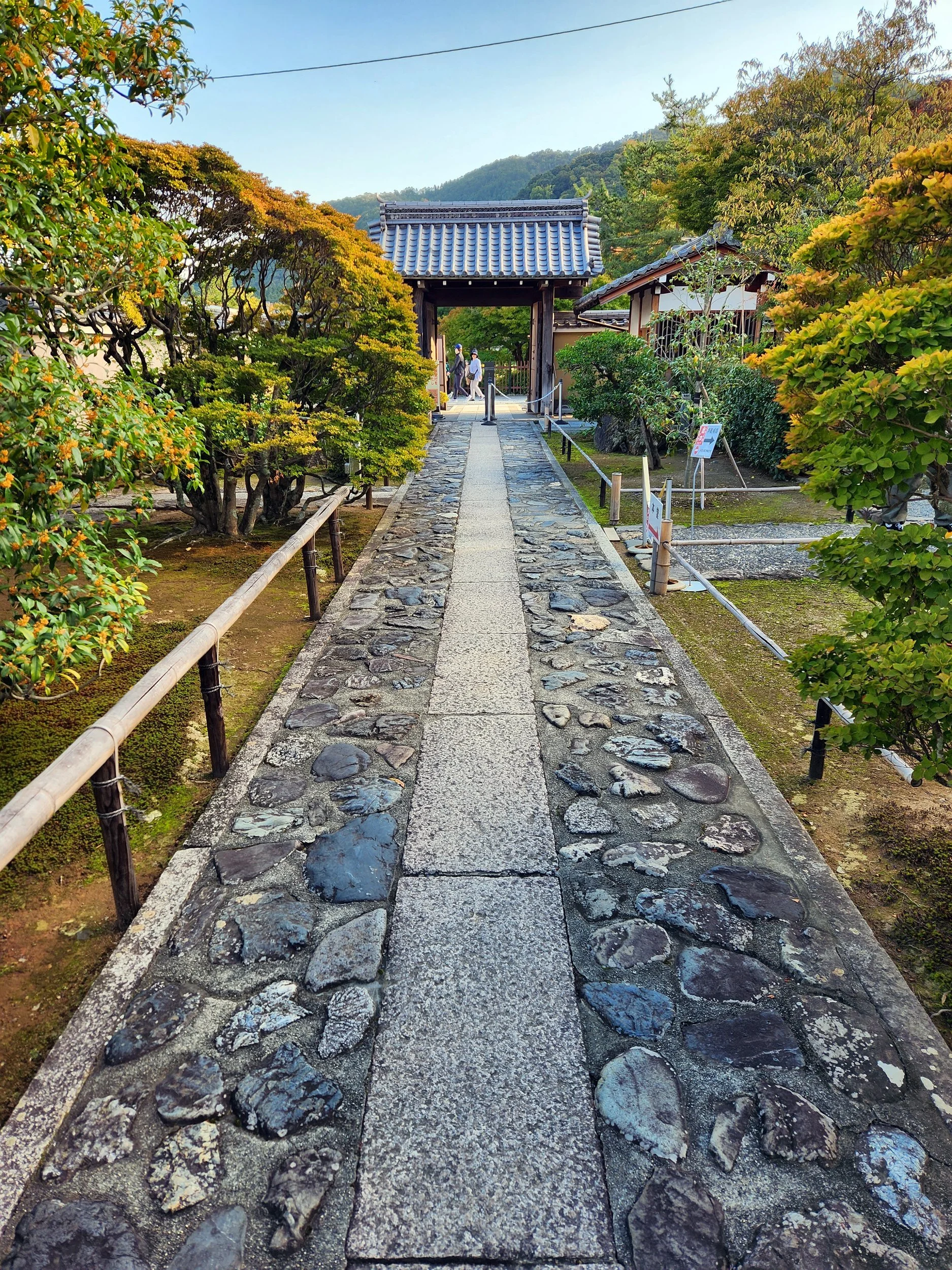
Cut-stone and cobble temple approach, Arashiyama
A cut-stone spine down the center, cobbles on each side. The smooth center carries foot traffic; the textured edges slow the eye and frame the walk. It is a formal approach that still feels hand-made.
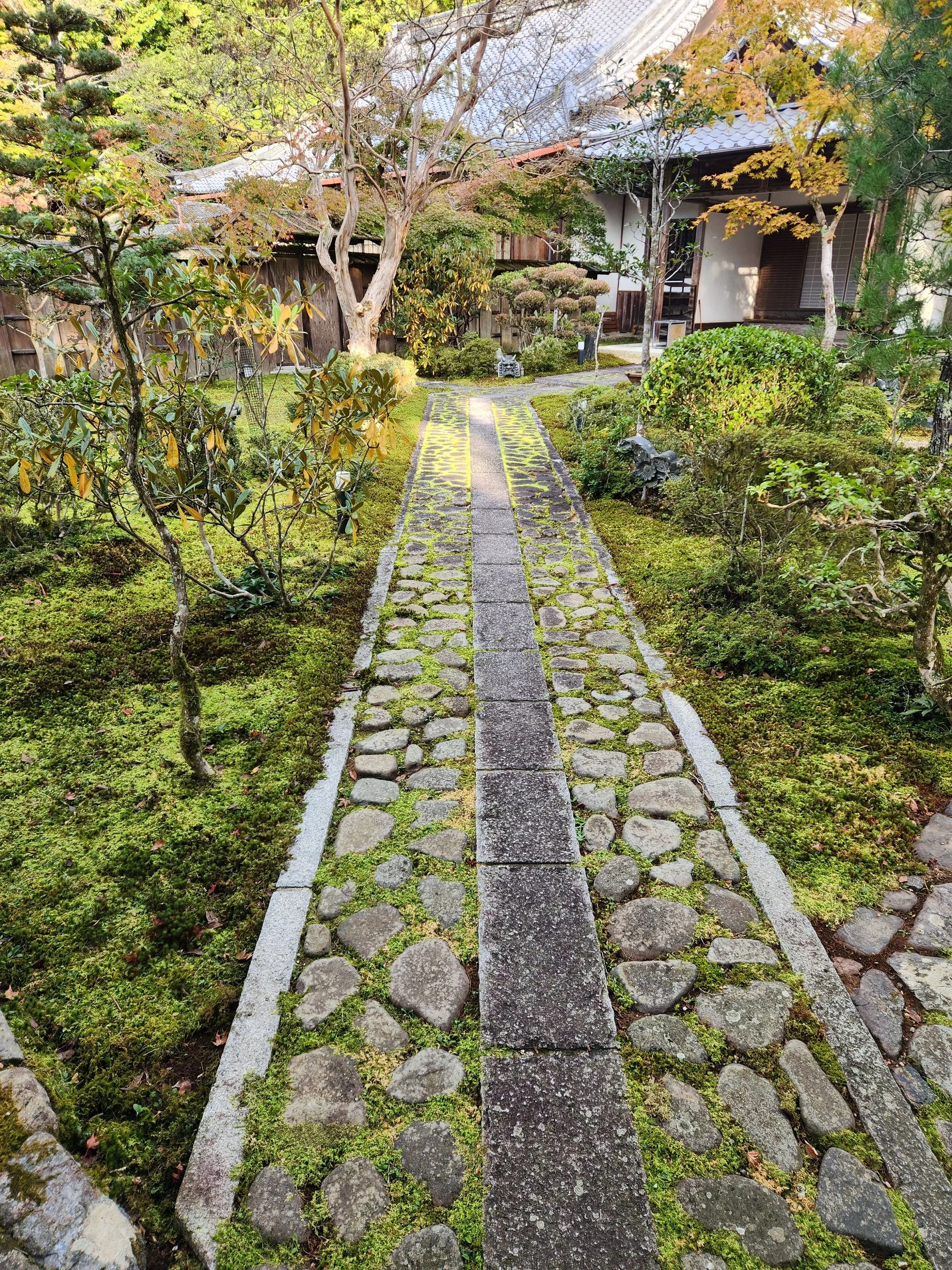
Granite strip path through moss, Kyoto
A granite strip path with cobble shoulders running through moss. The straight lines say "this way to the door", and the moss and cobbles keep it from feeling like a sidewalk.
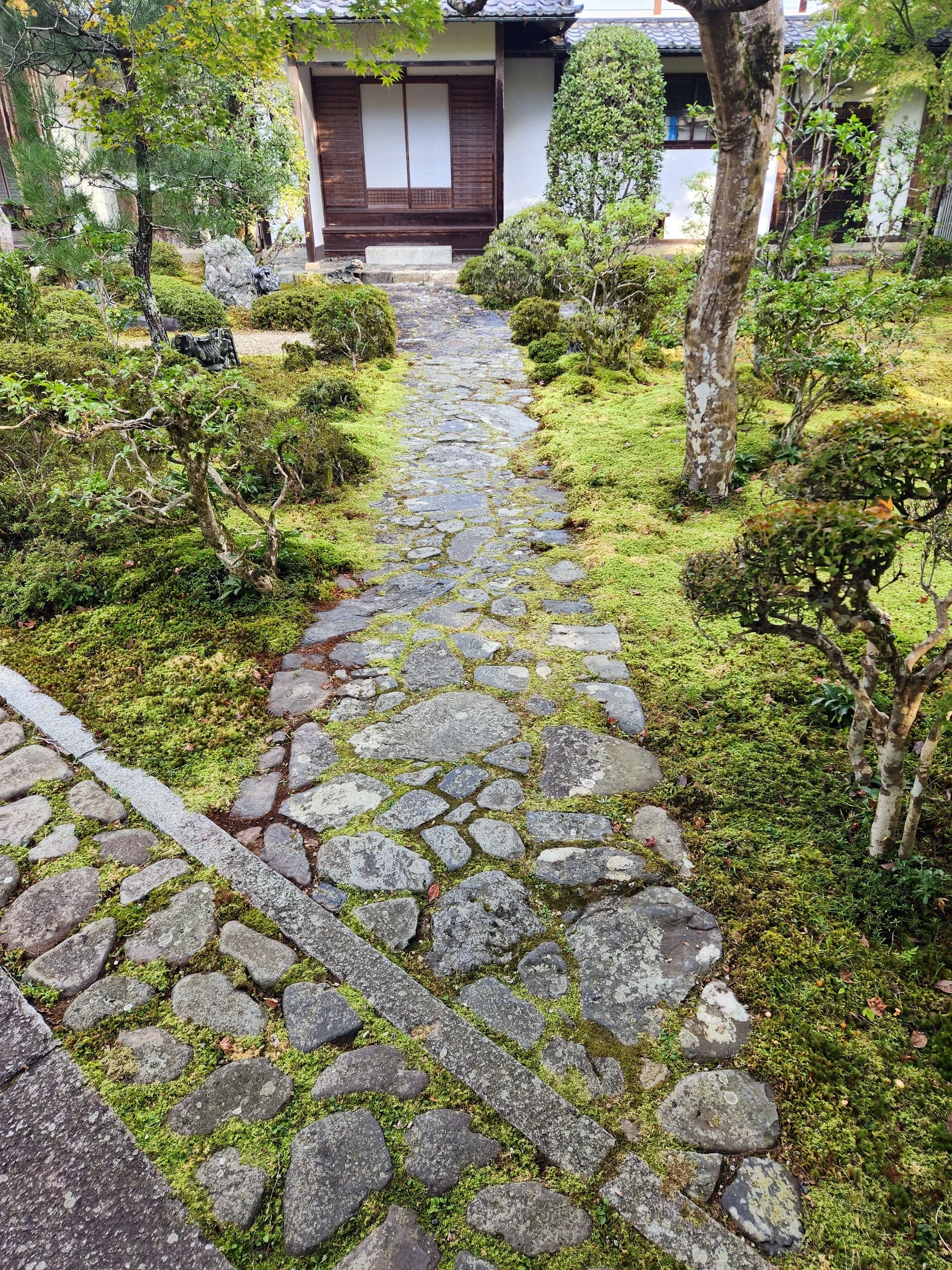
Cobble path to the house, Kyoto
The same path builder turns the walk into a looser river of cobbles as it approaches the house. Changing the pattern changes the pace. We use this idea to mark the shift from a driveway to a garden.
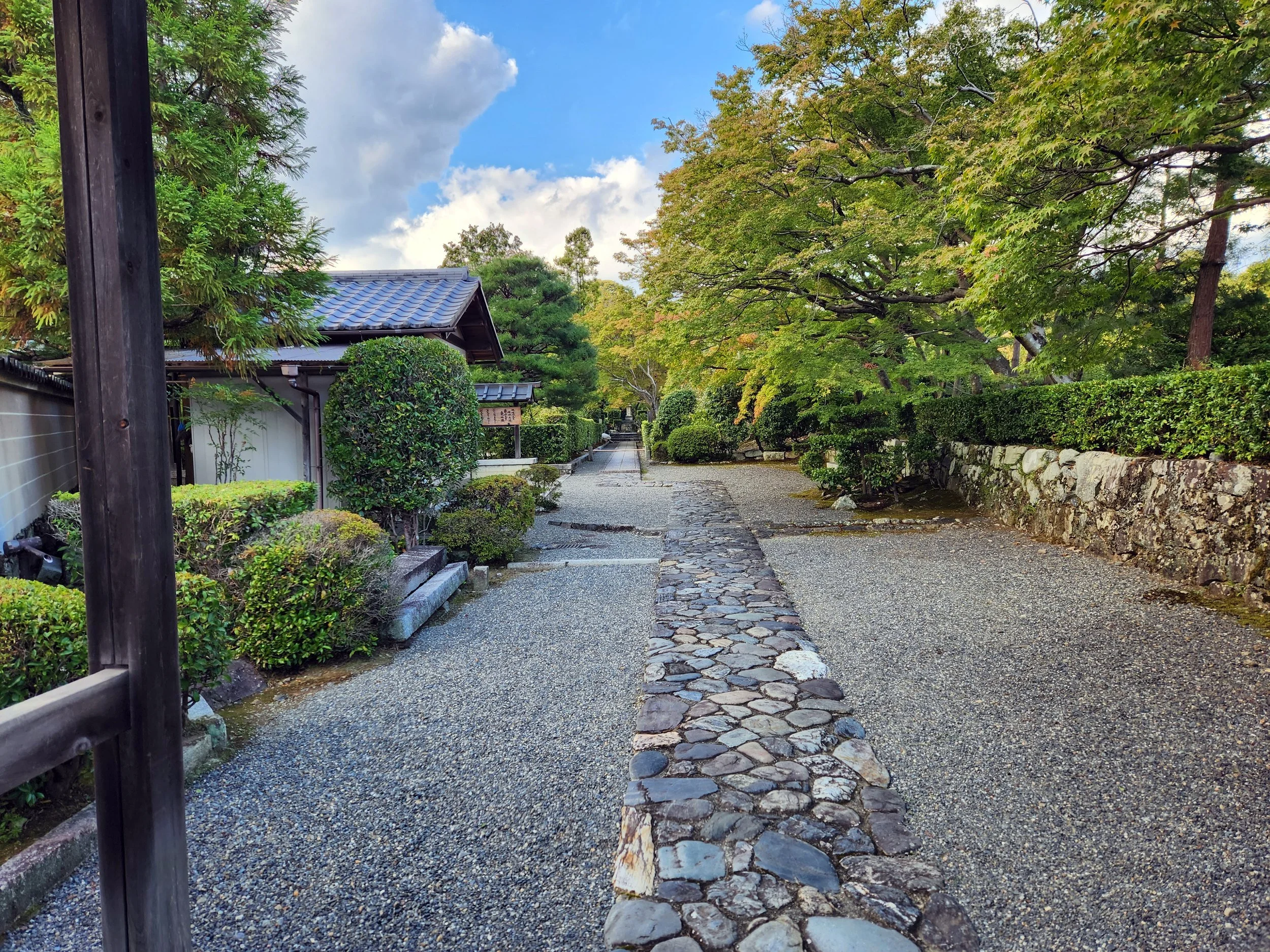
Gravel walk with a cobble spine, Arashiyama
A narrow band of cobbles laid down the middle of a gravel walk. A small detail, but it organizes the whole space and gives drainage a line to follow.
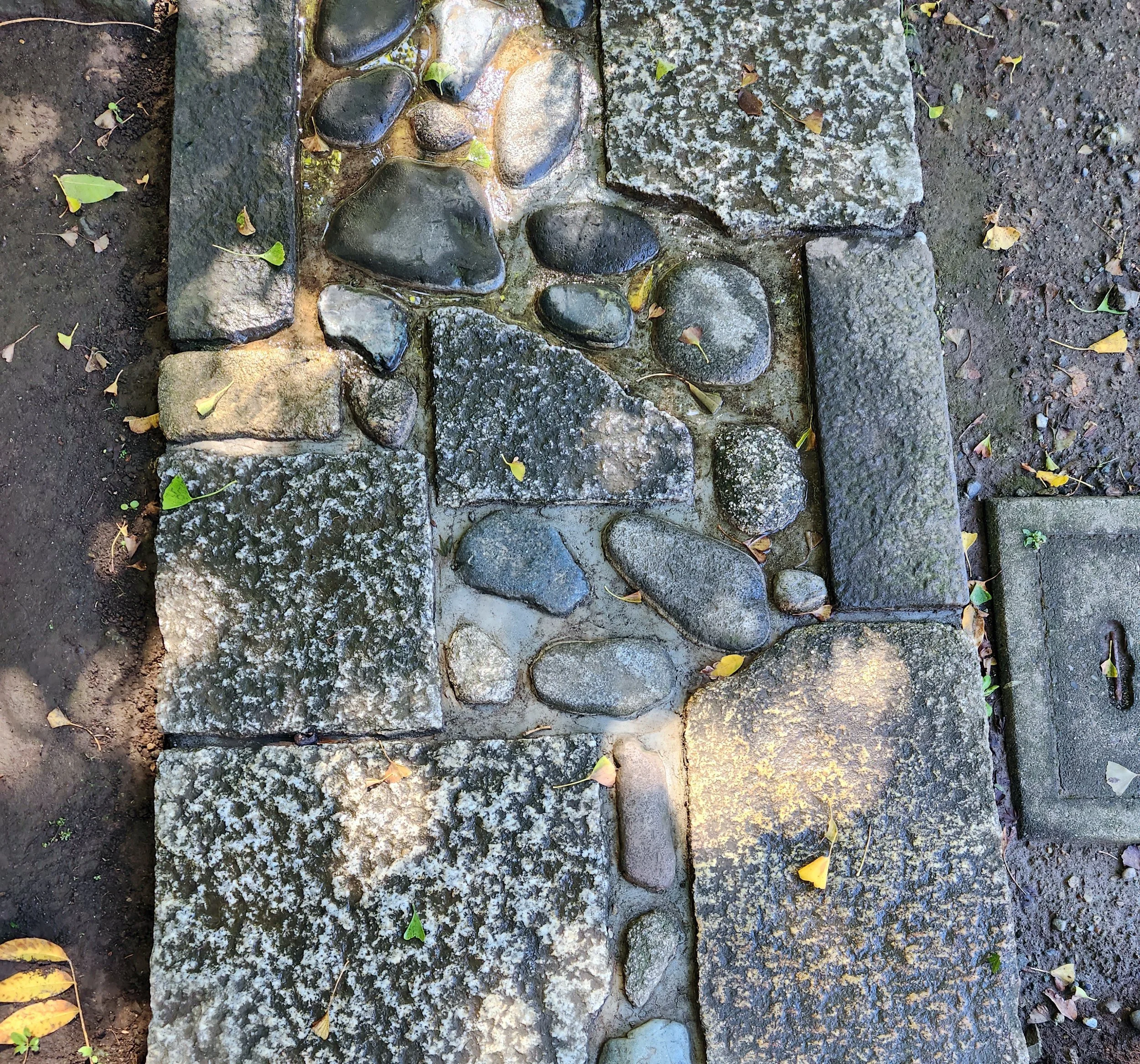
Cut granite and river cobble paving, Kōtoku-in, Kamakura
Cut granite pavers set among river cobbles. Mixing a dressed stone with a natural one is one of the most useful ideas we brought home: it suits bluestone and Maine granite just as well.
Pruning
Pines and maples shaped by hand, over decades, for the view as much as the tree.
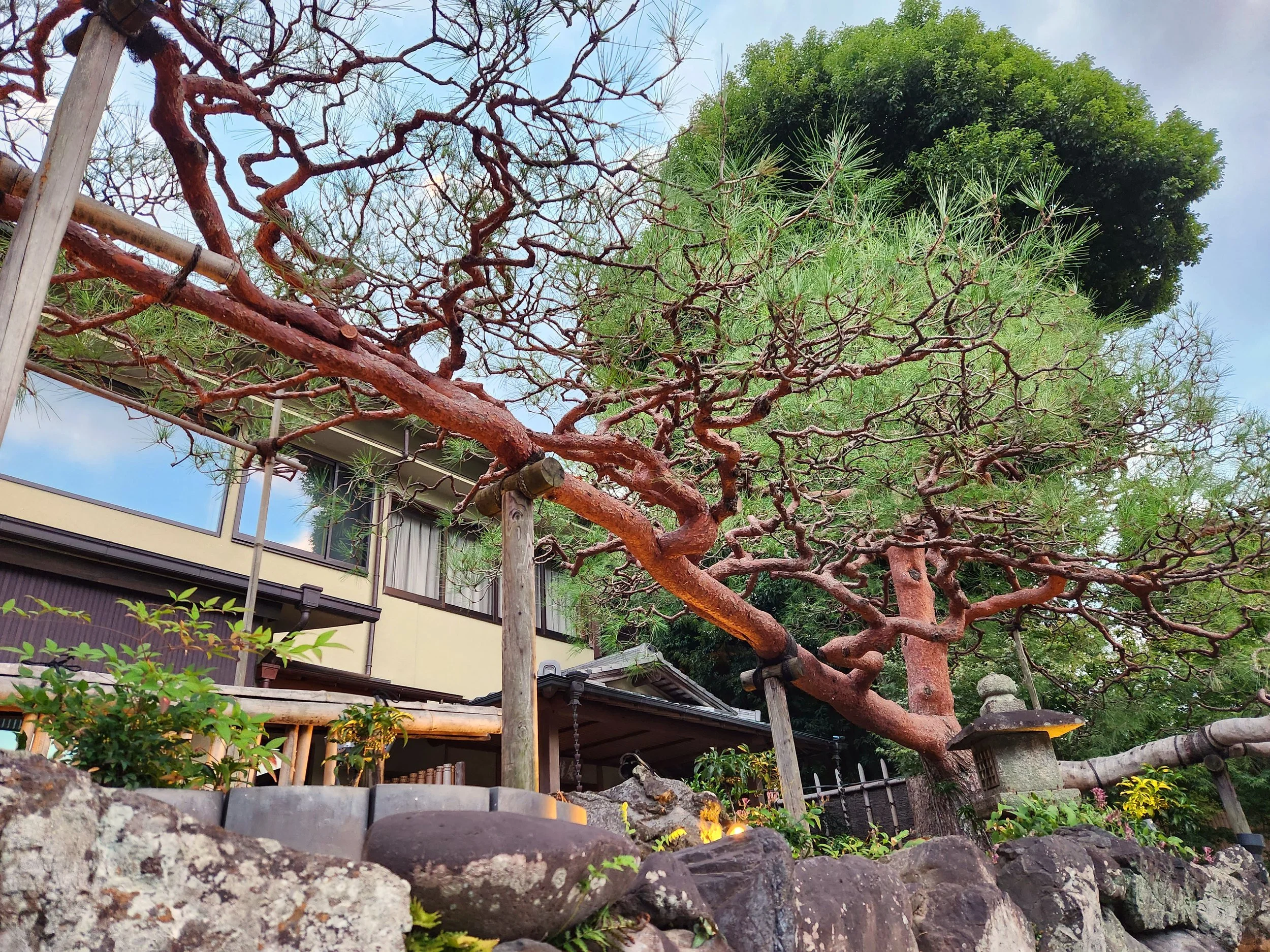
Hand-pruned red pine, Arashiyama, Kyoto
A red pine trained over decades: long horizontal limbs, open layers of foliage and bark kept clean. Japanese pine care is done by hand, pinching new spring shoots and thinning old needles in autumn. We use the same techniques on pines and maples in Maine gardens.
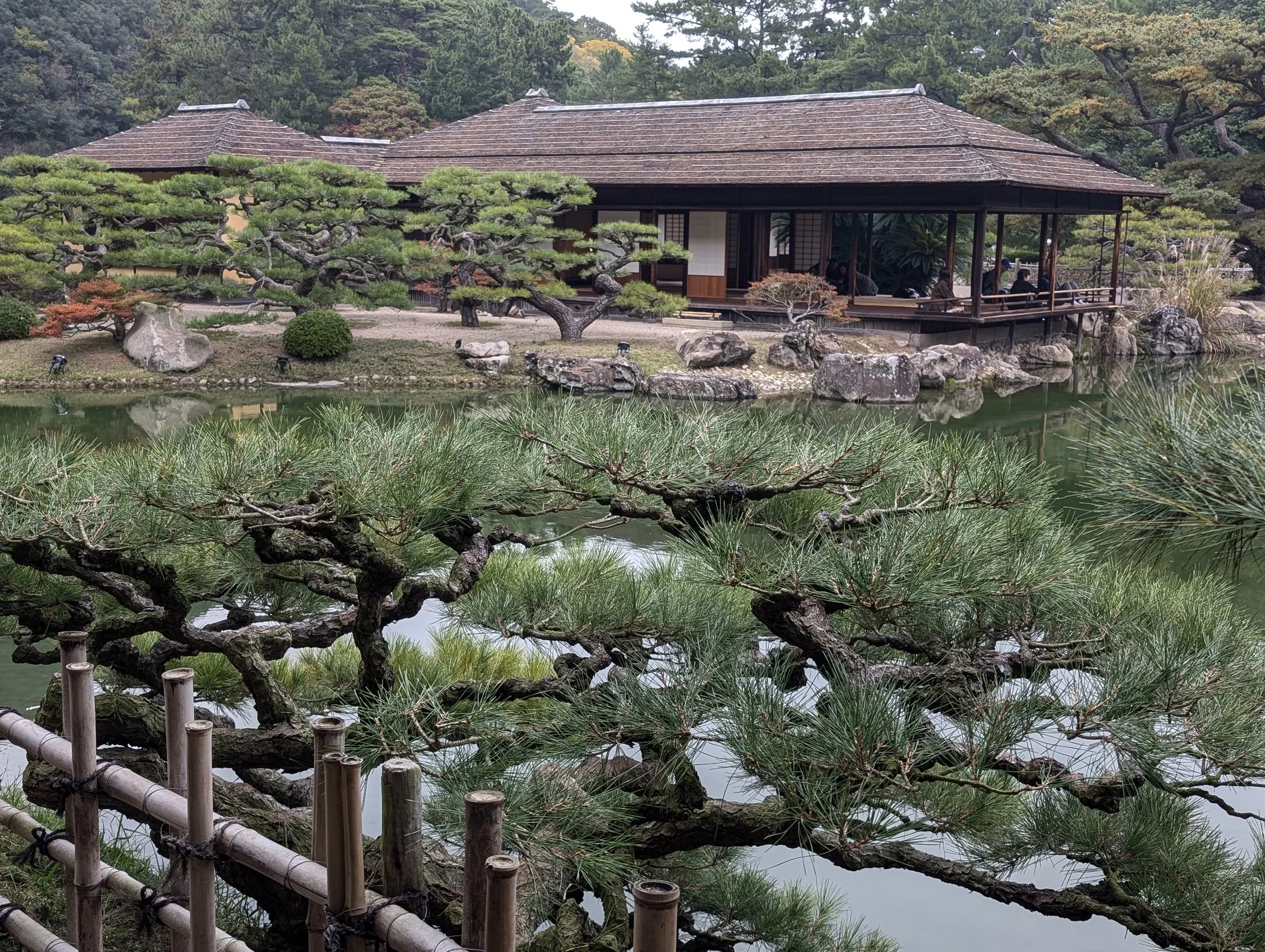
Cloud-pruned pines and Kikugetsu-tei, Ritsurin Garden
Pines shaped into low, layered clouds frame the Kikugetsu-tei teahouse across the pond. The pruning is about the view as much as the tree: each branch is placed to open or hide part of the scene.
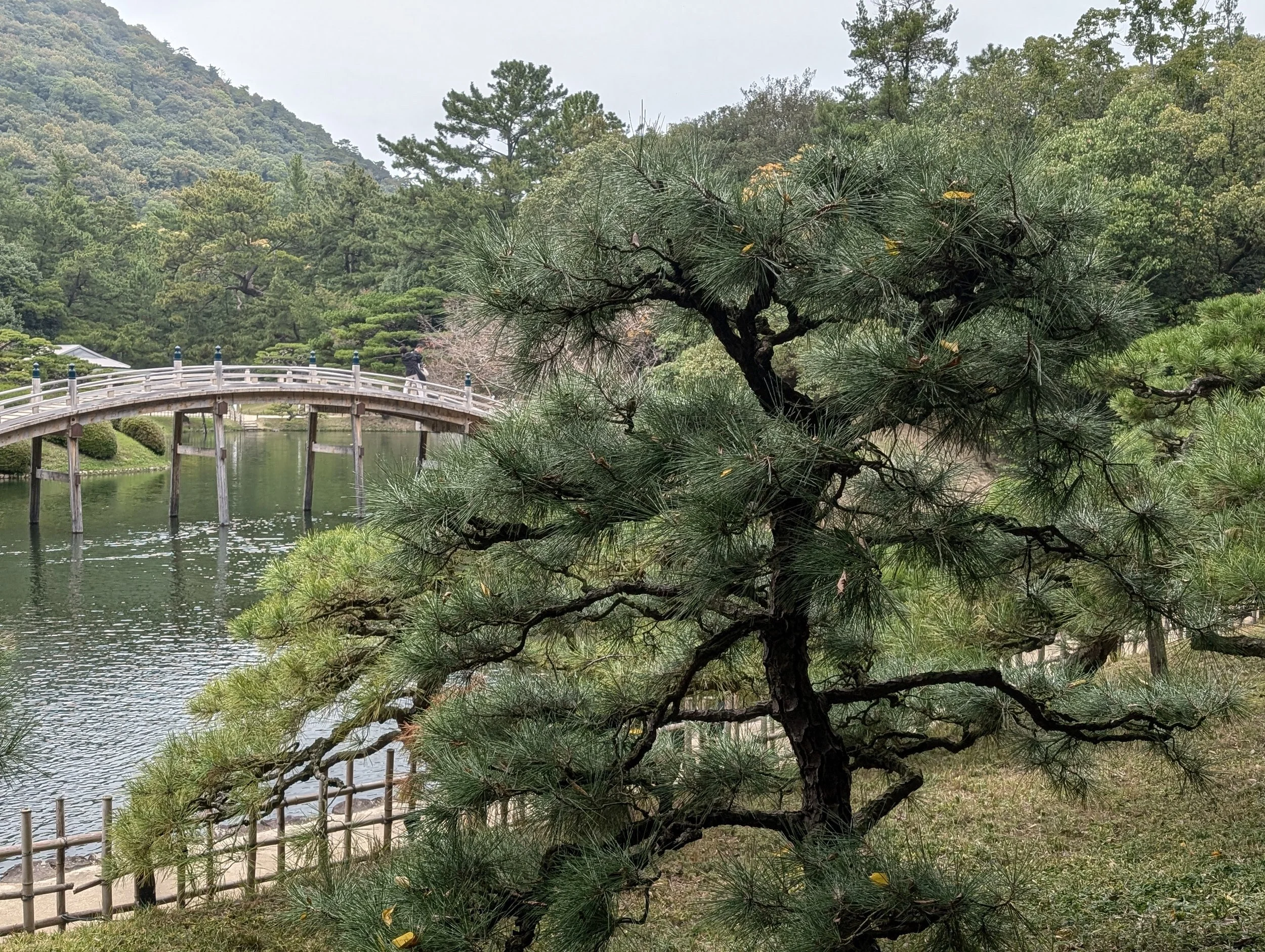
Pruned pine and Engetsu-kyō bridge, Ritsurin Garden
A sculpted pine in the foreground, the arched Engetsu-kyō bridge behind. Pruning the near tree open lets you look through it to the garden beyond, a trick that makes a small space feel deeper.
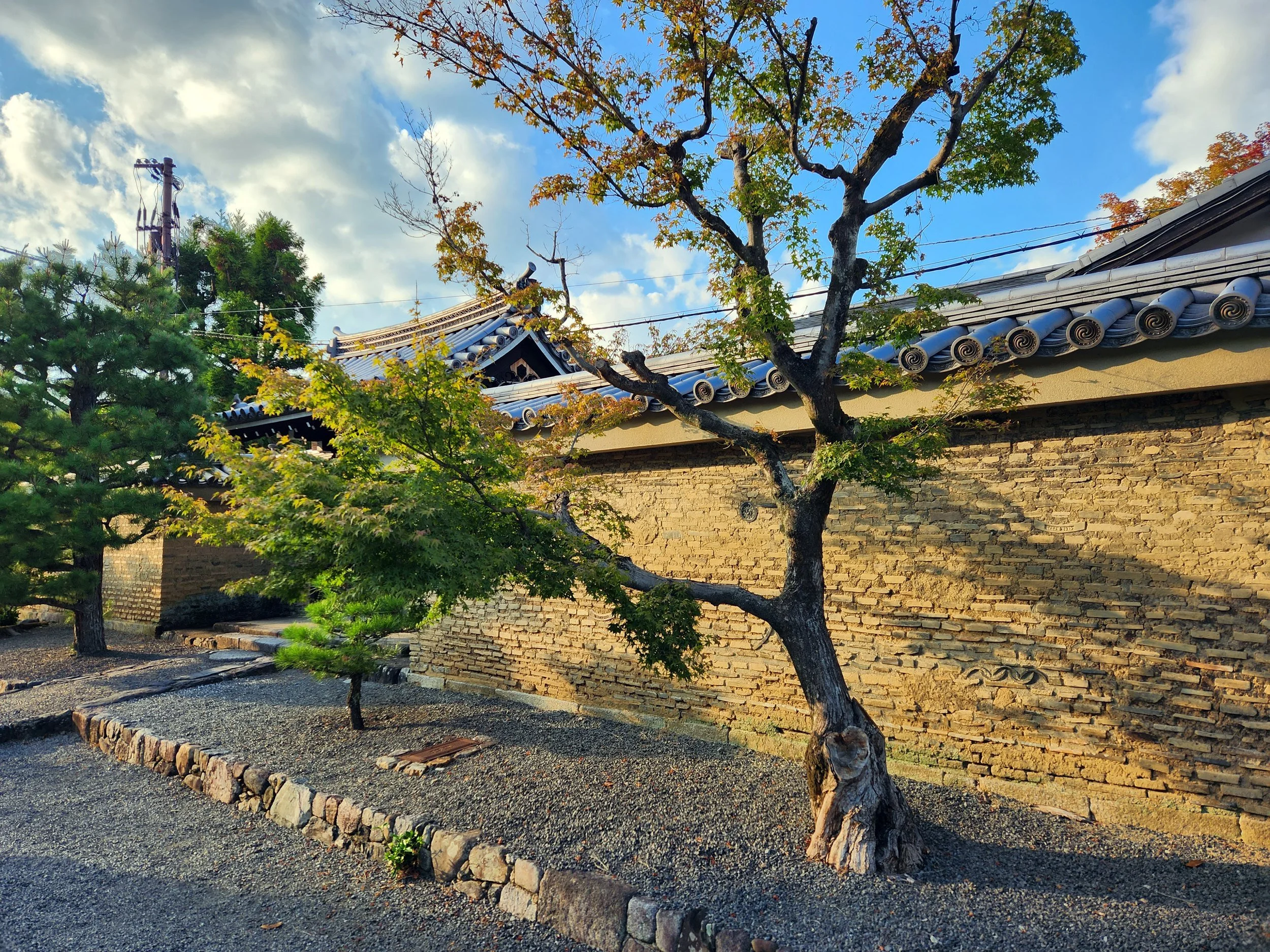
Maple against a temple wall, Arashiyama
A single maple placed against a long temple wall. A restrained pruning style lets the trunk line show. One well-placed tree in front of a plain wall can carry an entire courtyard.
Garden design
Composition, restraint and borrowed scenery.
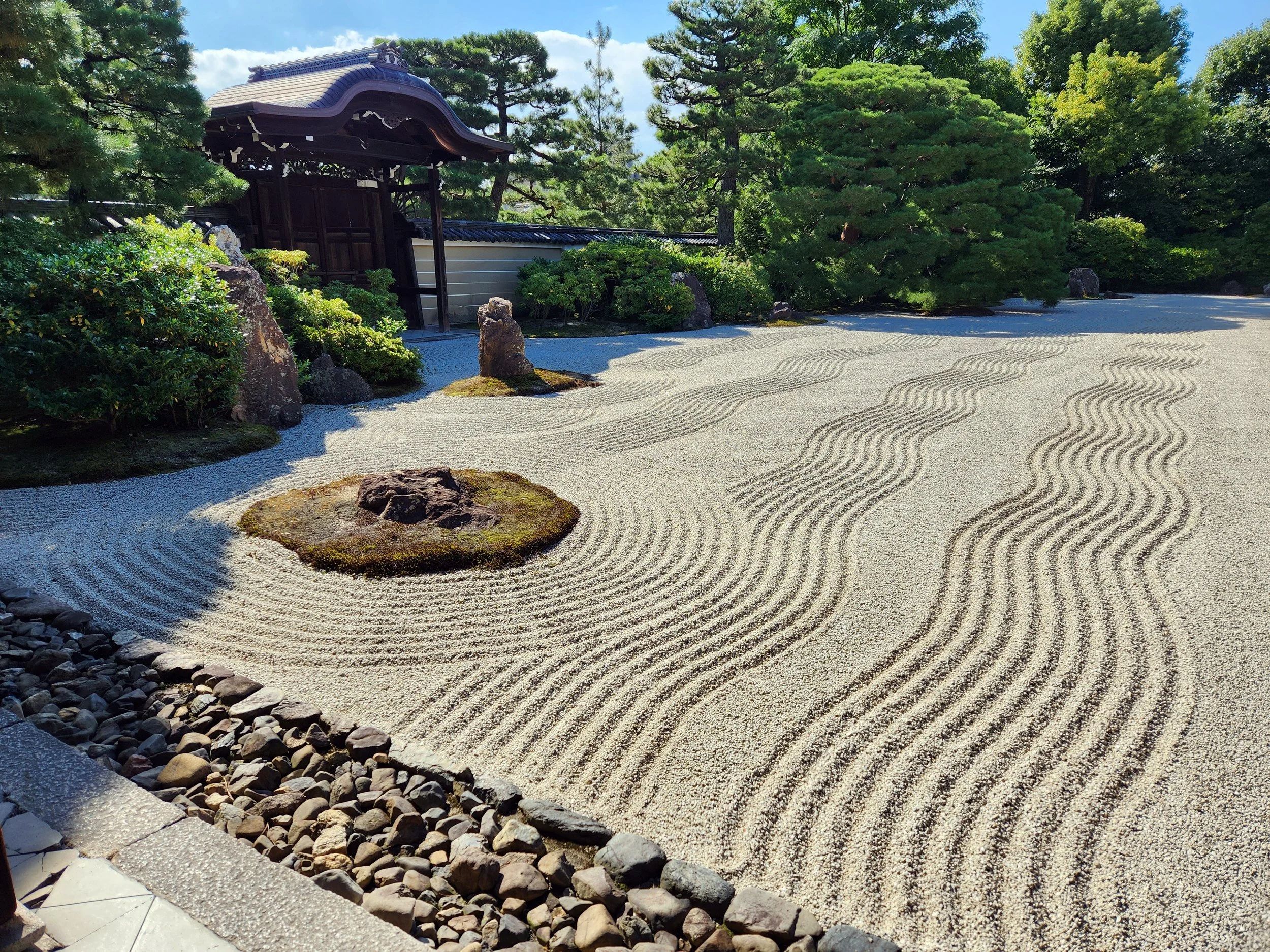
Raked gravel dry garden, Kyoto
Raked gravel waves sweep around a moss island and a single upright stone. Very few elements, all placed with care. The empty space is as designed as the stones.
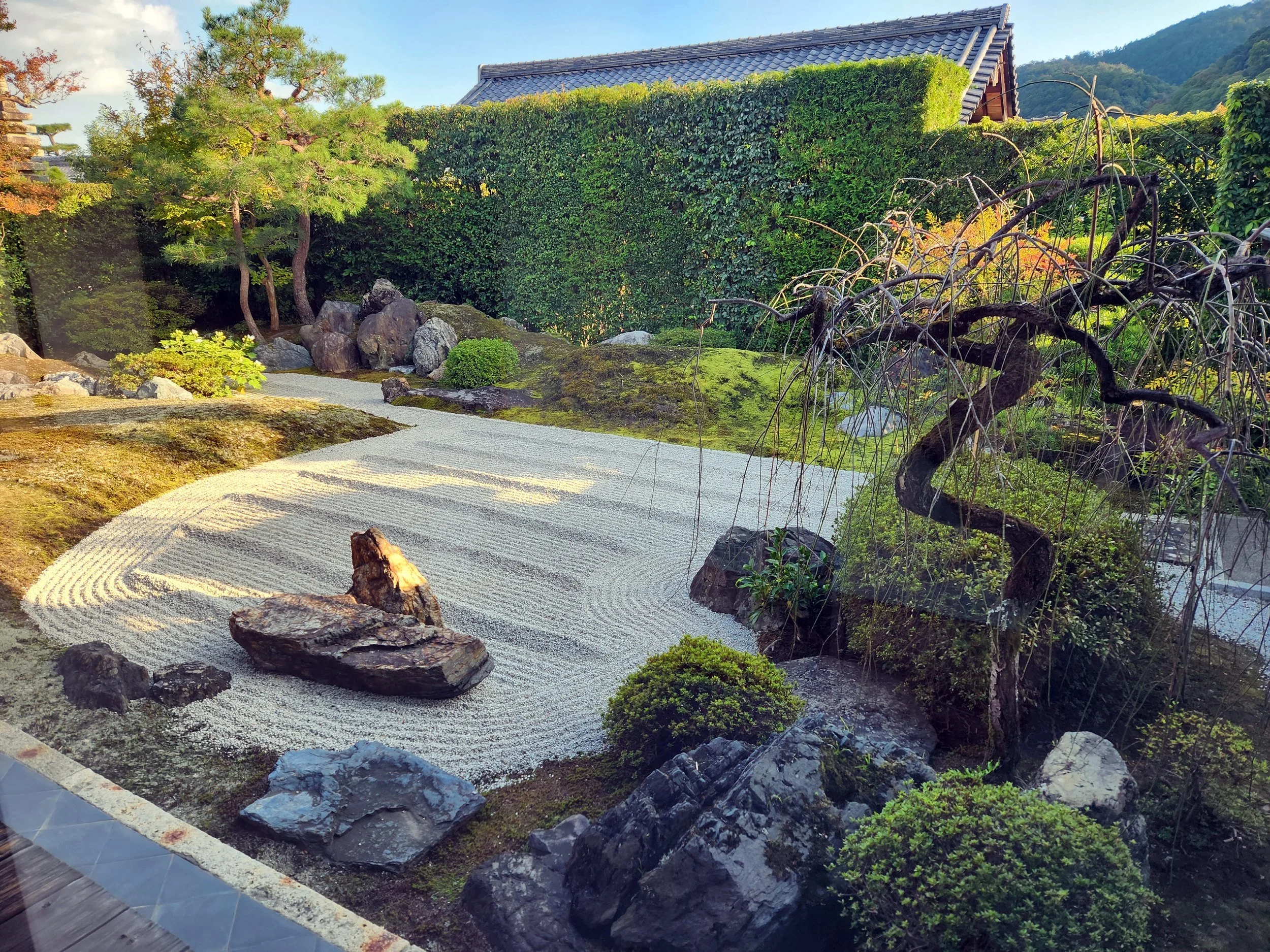
Dry garden with borrowed scenery, Arashiyama
A dry garden with a weeping tree, low clipped shrubs and a stone "boat" in the gravel, all backed by a hedge and the hills beyond. The hills are borrowed scenery (shakkei), part of the composition even though they lie outside the garden.
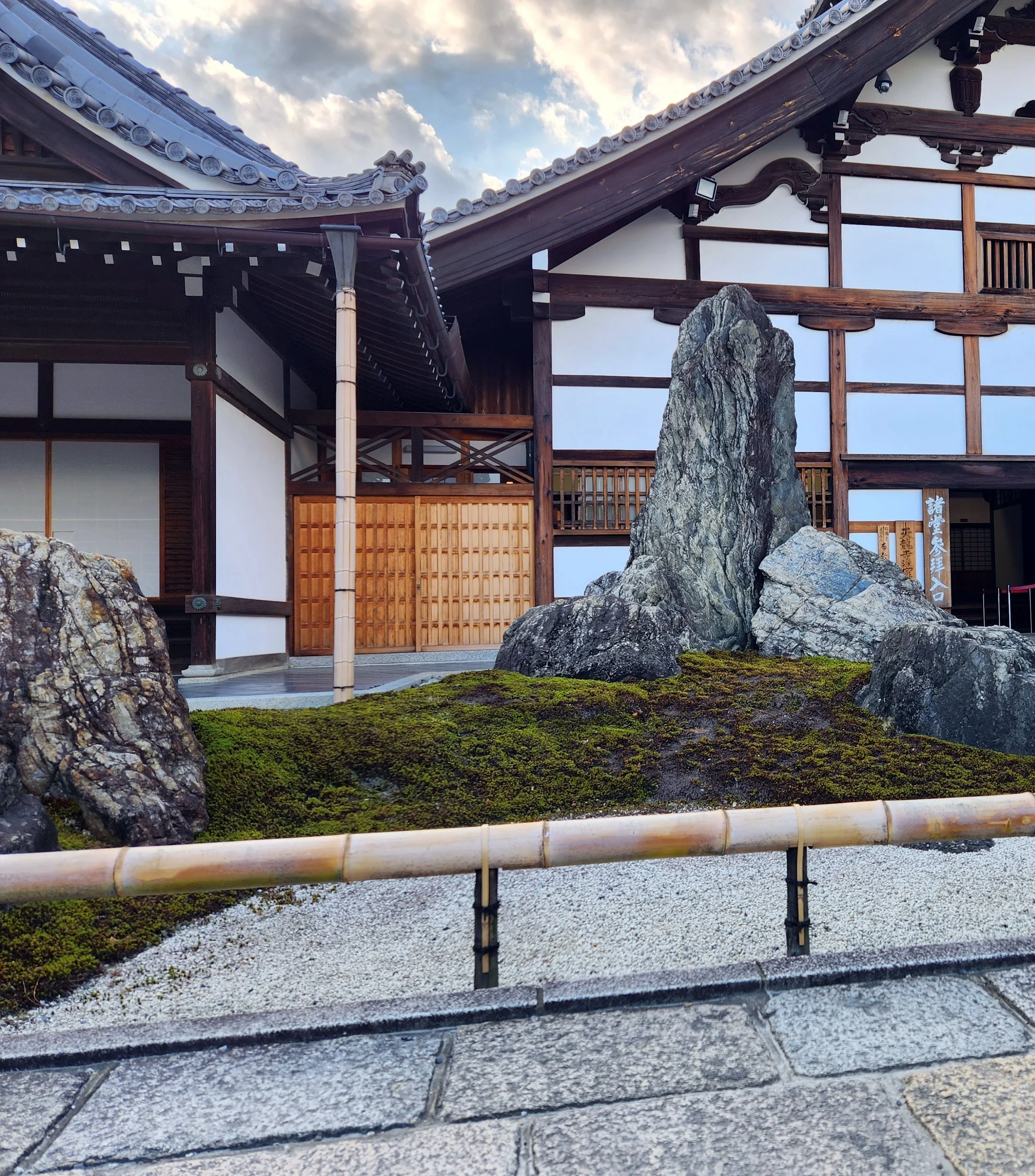
Standing stone arrangement, Tenryū-ji, Kyoto
A tall standing stone with smaller companions on a mound of moss at the entrance to the main hall. A few strong stones, set with conviction, can greet visitors better than any planting.
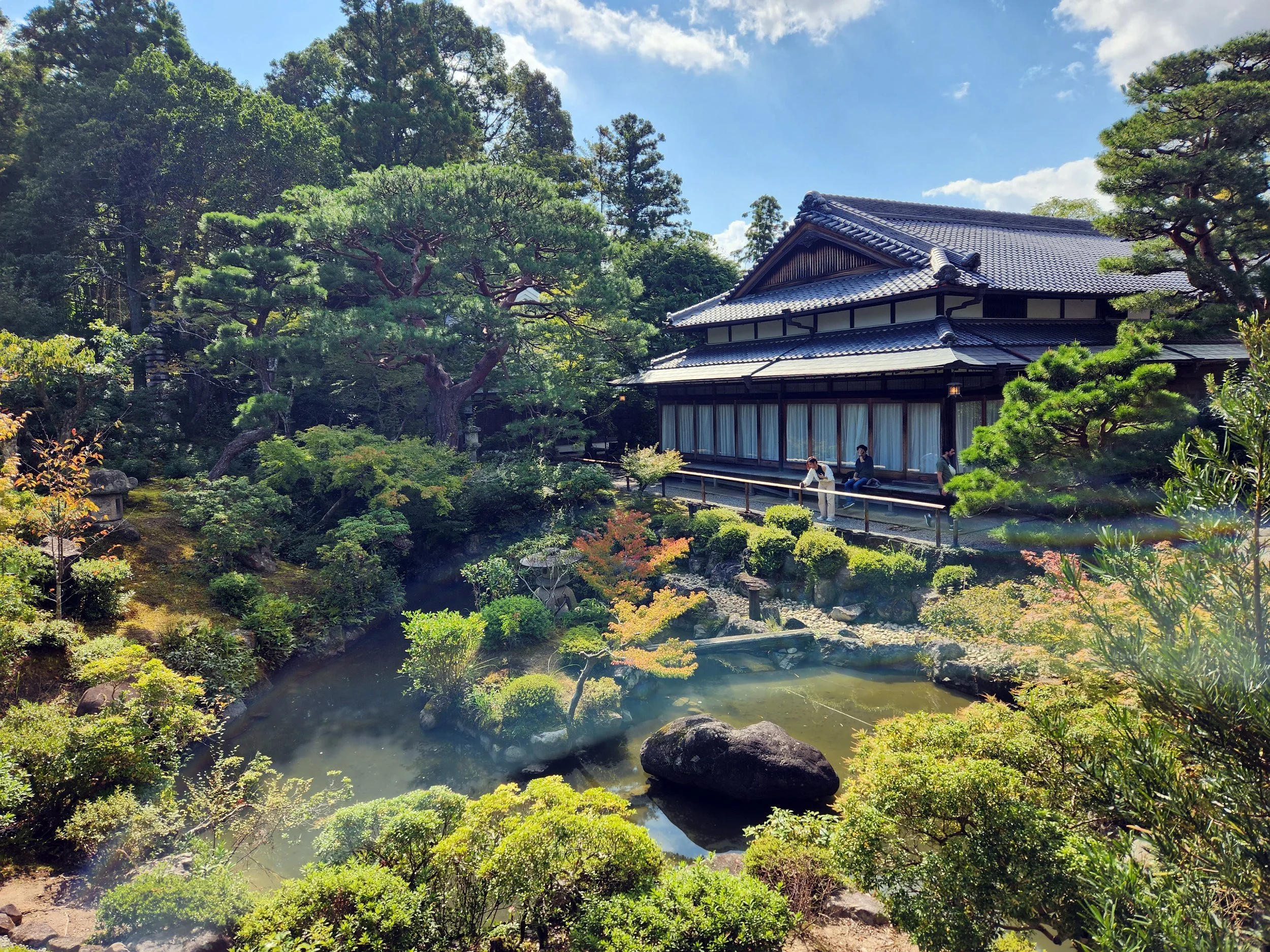
Pond garden viewed from above, Yoshikien, Nara
A pond garden seen from above: a large dark stone in the water, clipped shrubs, maples and pines stepping back to the house. The garden is built to be viewed from the veranda, and every layer leads the eye there.
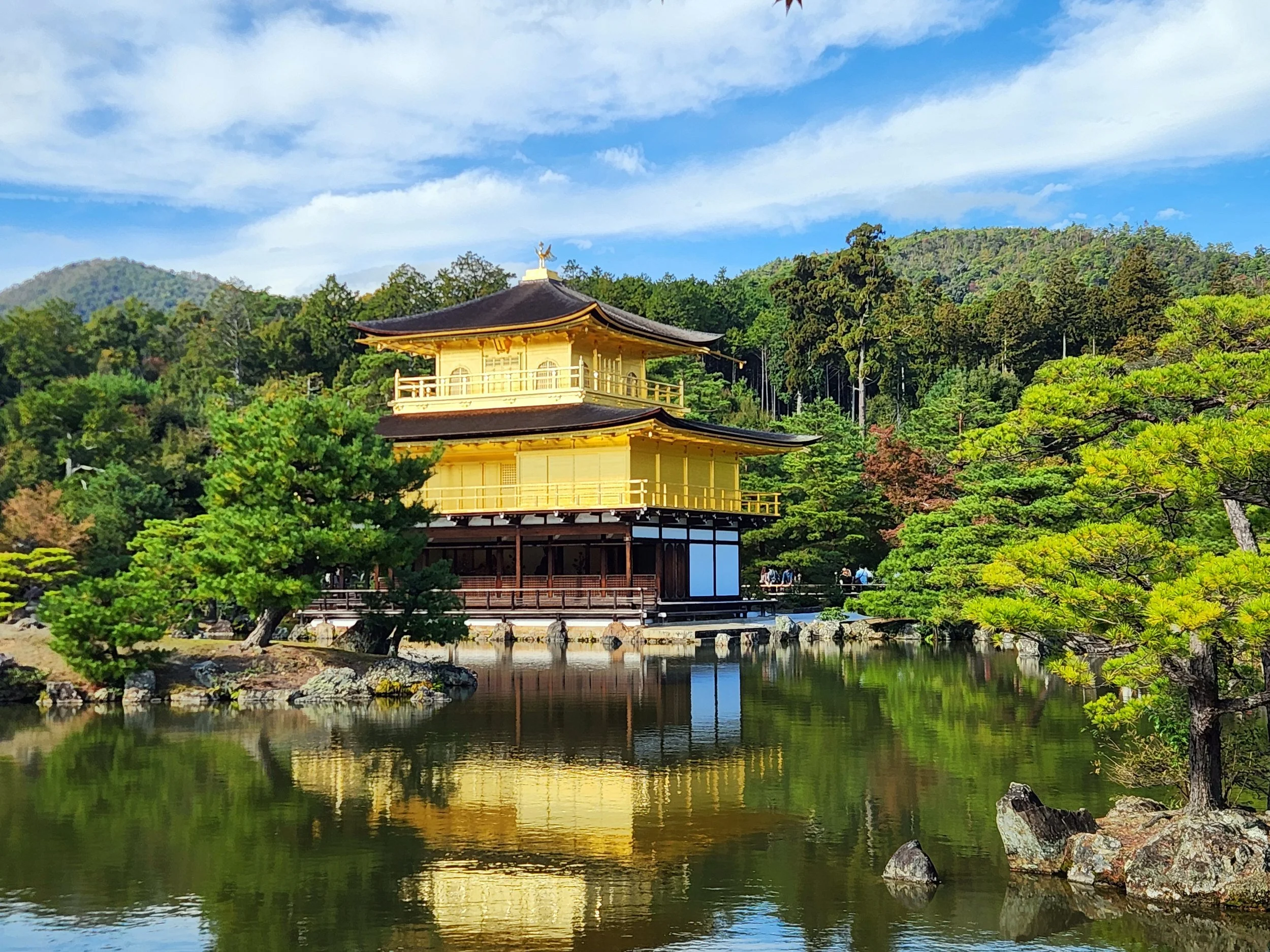
Kinkaku-ji and the Mirror Pond, Kyoto
The Golden Pavilion doubled in the Mirror Pond. Water is used here as a reflecting surface, and the shoreline stones and pines are placed with that reflection in mind.
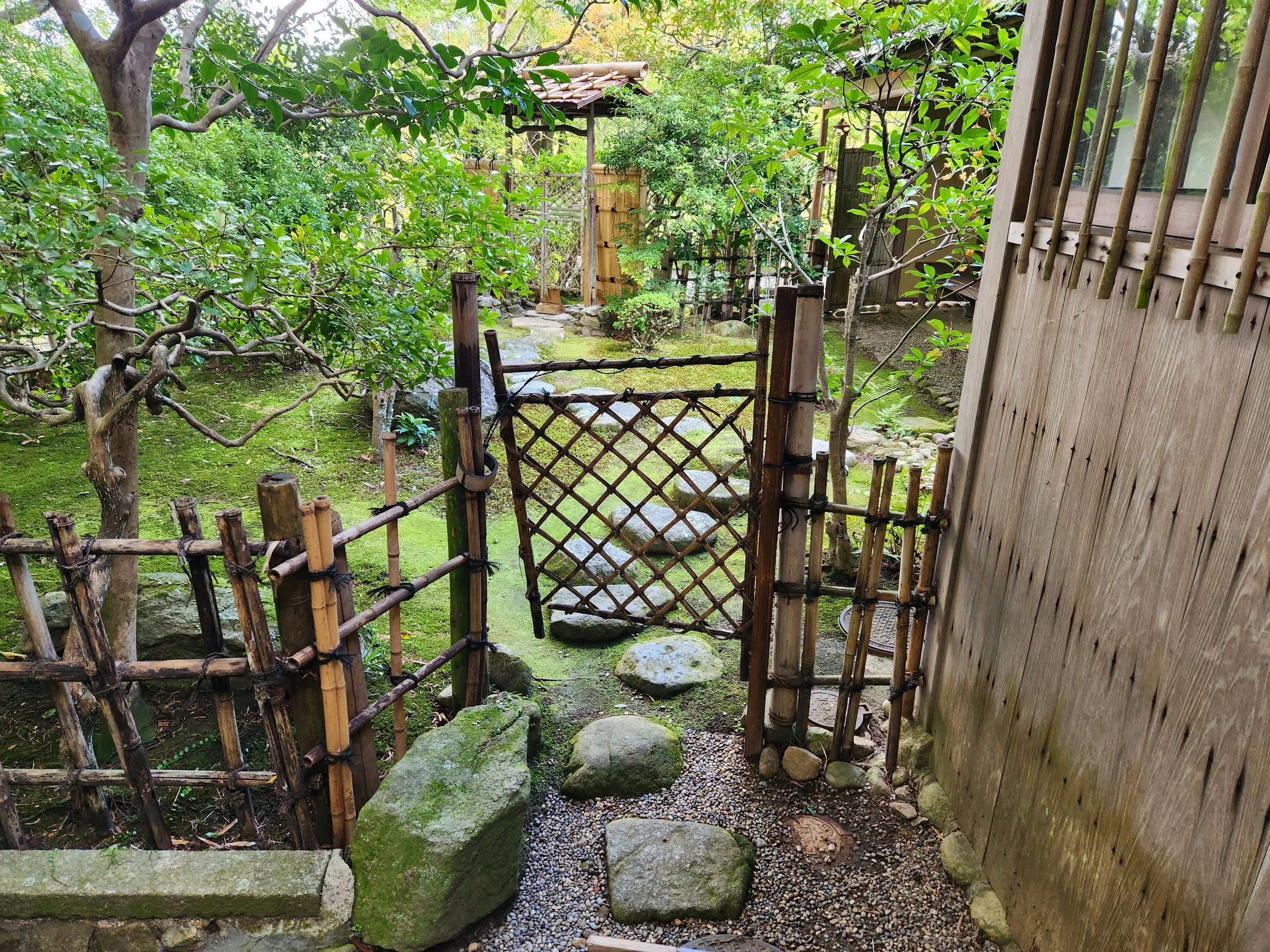
Tea garden gate and stepping stones, Yoshikien, Nara
A bamboo lattice gate, a low fence and stepping stones leading into a tea garden. The path slows you down and the gate marks a change of mood: you leave the everyday world at the threshold.
Bring it home
These gardens are centuries old, and they still teach. If you would like a garden in Maine or beyond that carries some of this quiet, studied character, let's talk.